A generator can be a lifesaver after a storm — or a deadly hazard if used wrong. Here's how to run one safely.
When the power goes out after a storm, a portable generator keeps the fridge cold and the phones charged. But generators cause serious injuries and deaths every hurricane season, almost always from preventable mistakes. Here's how to use one safely.
The number one rule: never indoors
Portable generators produce carbon monoxide — an odorless, invisible, deadly gas. Never run one inside a home, garage, carport, or shed, even with doors and windows open.
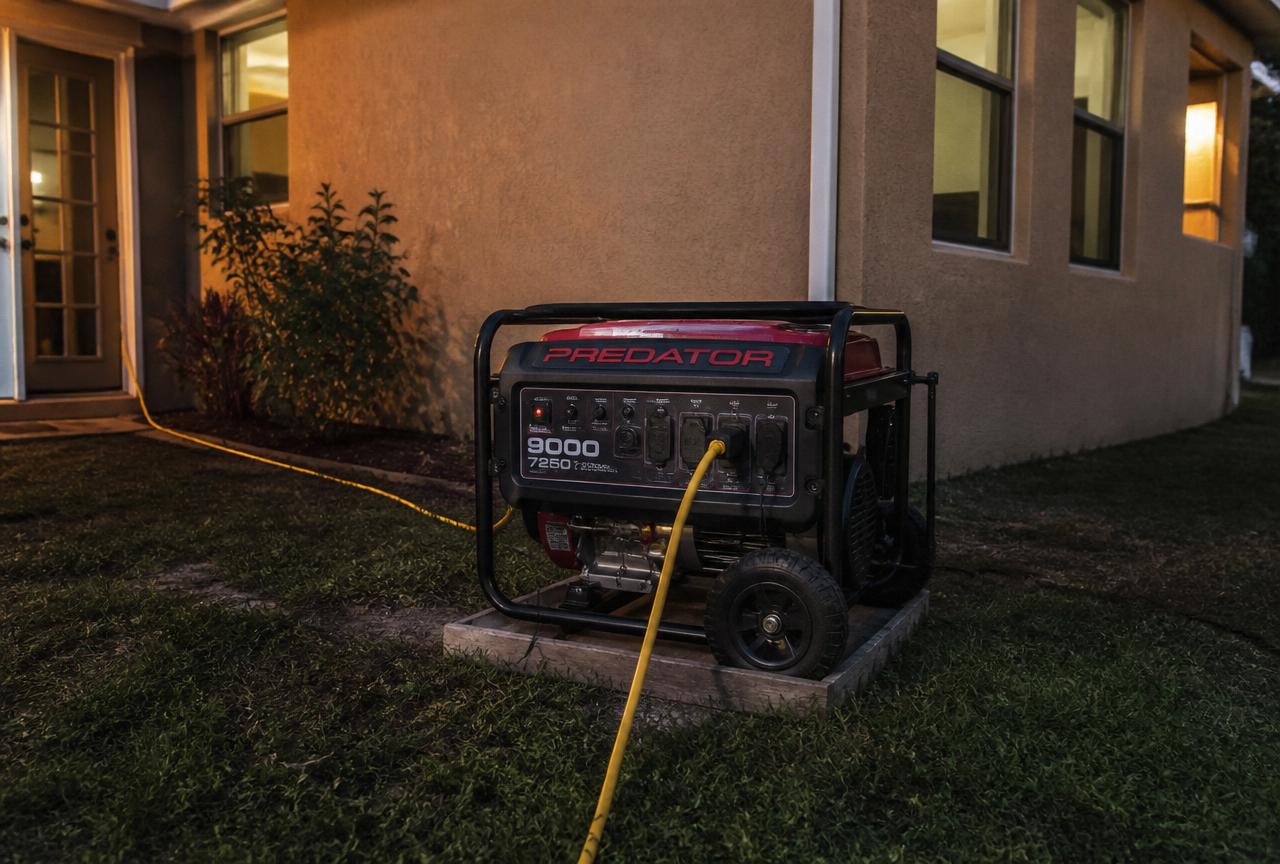
- Place it outdoors, at least 20 feet from the house
- Point the exhaust away from doors, windows, and vents
- Install battery-powered carbon monoxide alarms in your home
- Never run it near where anyone is sleeping
Fuel and electrical safety
- Store fuel in approved containers, away from living areas
- Let the generator cool before refueling — hot engines and gasoline don't mix
- Use heavy-duty outdoor-rated extension cords
- Never plug a generator into a wall outlet ("backfeeding") — it can electrocute utility workers
- If you want to power your whole home, have an electrician install a proper transfer switch
Sizing and maintenance
Match the generator to what you actually need to run — usually a fridge, some lights, fans, and device chargers. Test it before the season, keep it maintained, and store enough fuel (safely) to get through a multi-day outage.
Weather protection
Never operate a generator in the rain unless it's under a proper open-sided canopy designed for the purpose. Water and electricity are a lethal combination.
A generator is one of the most useful tools after a hurricane — treat it with respect and it'll keep your household comfortable and safe.
Enjoyed this? Share it with a neighbor.